Hearing motor faults without opening the motor
E-bike motors get thrown away when they could be repaired. I built a tool that listens to the vibrations of a running motor to tell a healthy one from a broken one, from the outside.
The problem
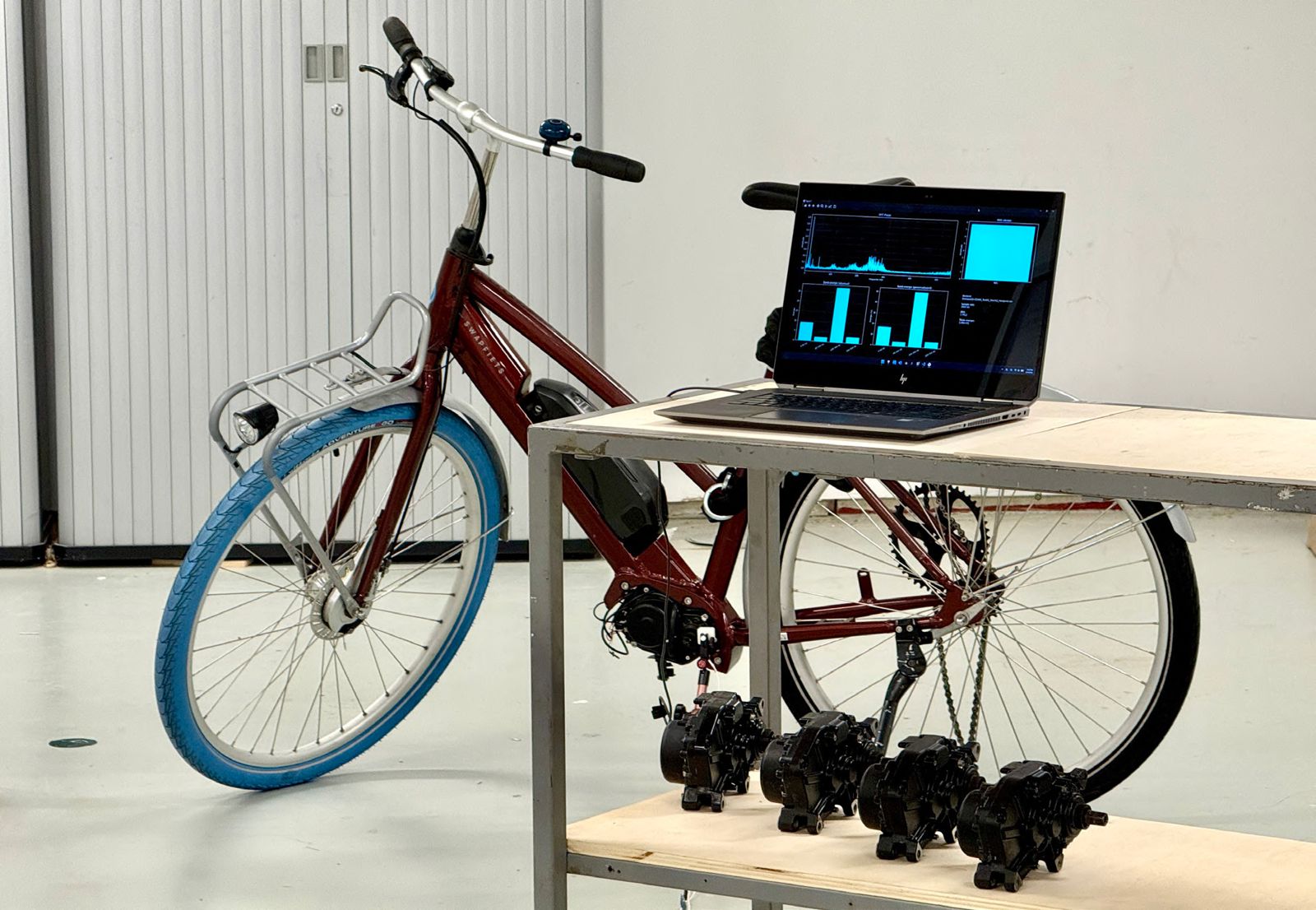
01When an e-bike motor fails, it usually gets replaced as a whole. Yet most failures are mechanical: worn bearings and gears that can technically be repaired.
The bike mechanic is the first to see a struggling motor, but can't look inside. Diagnostic software only reads error codes. Experts at refurbishment companies diagnose by ear and feel: "this sounds wrong." So motors reach them too late, or not at all.
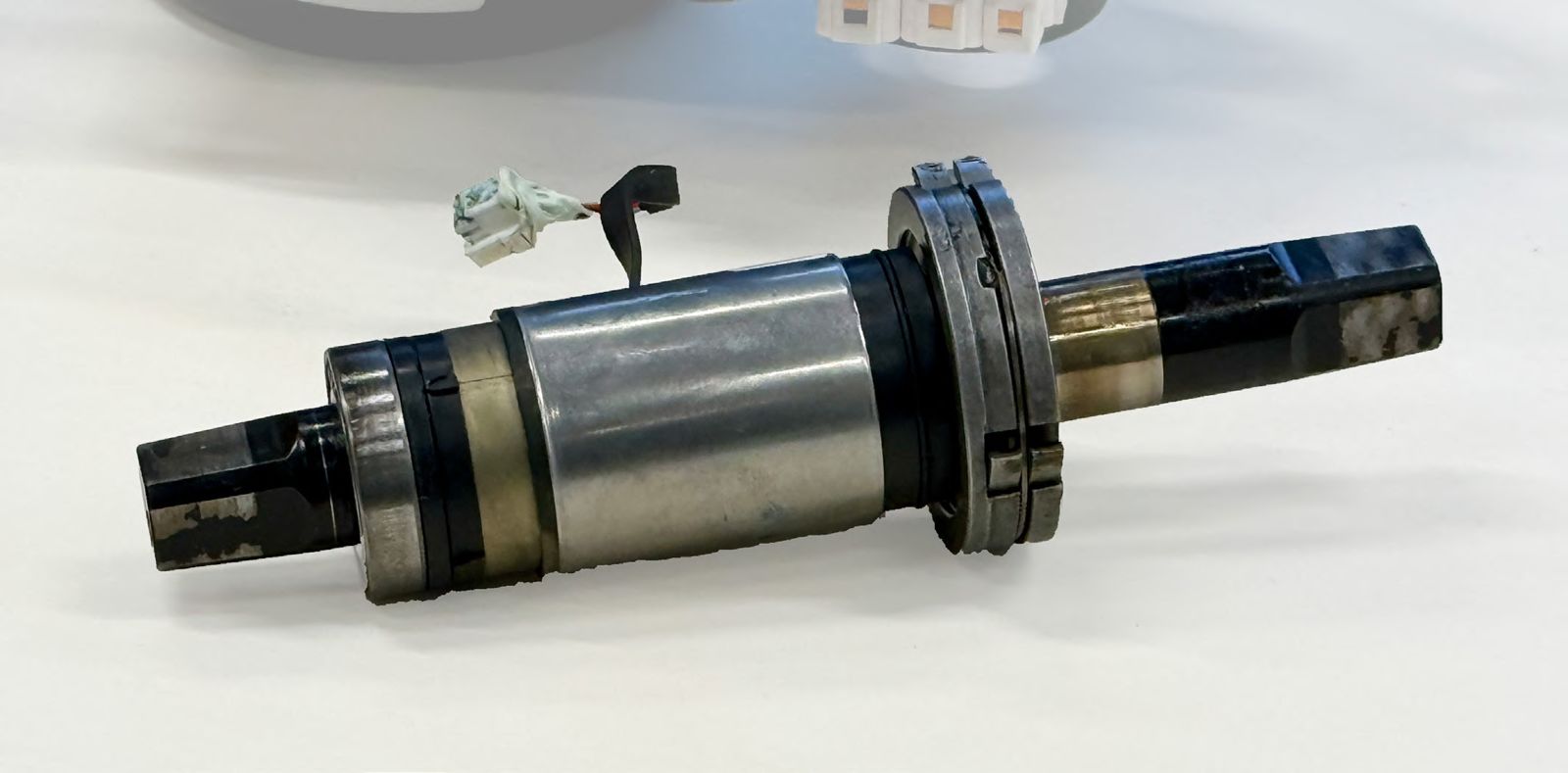
Inside the motor
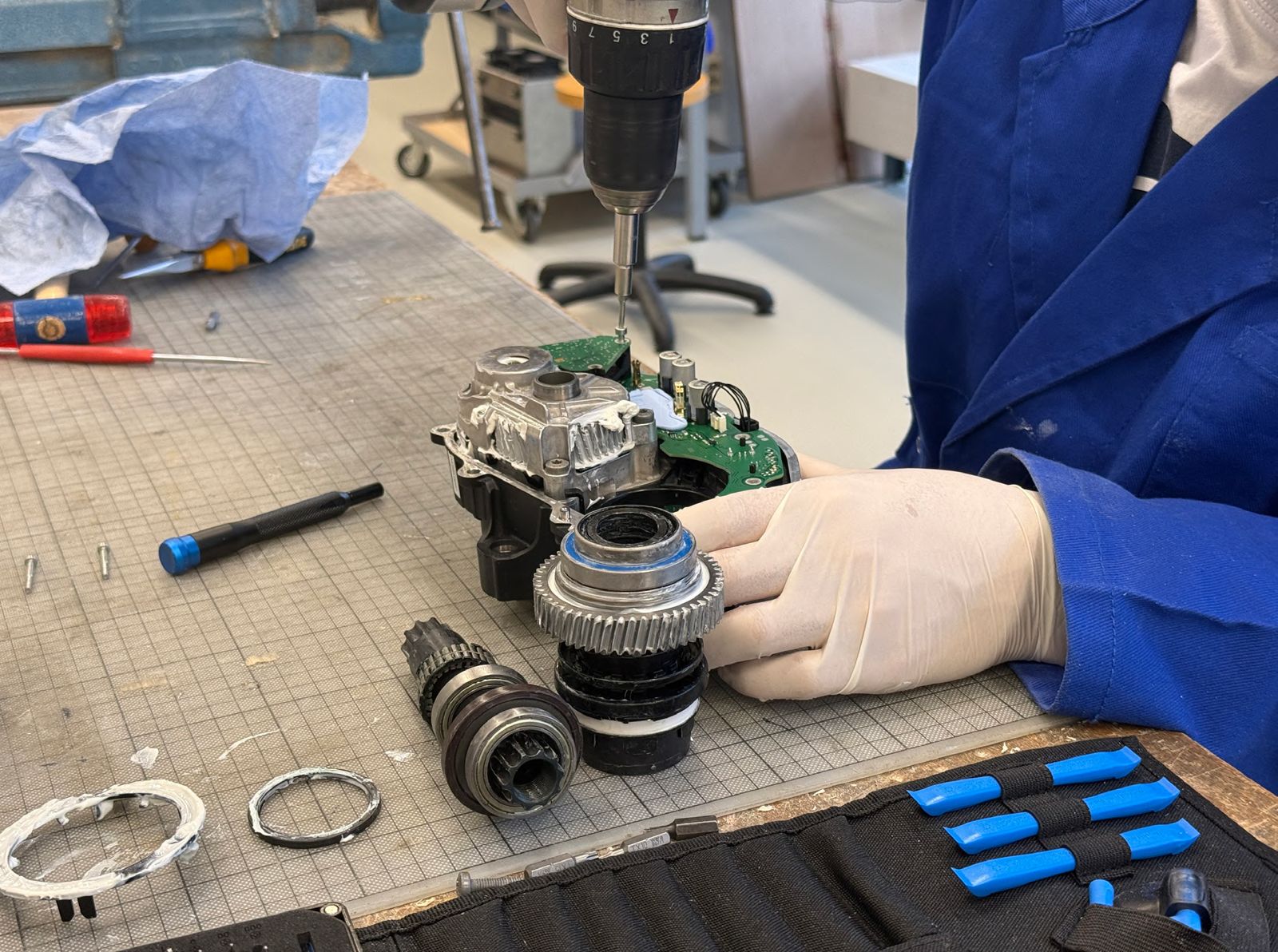
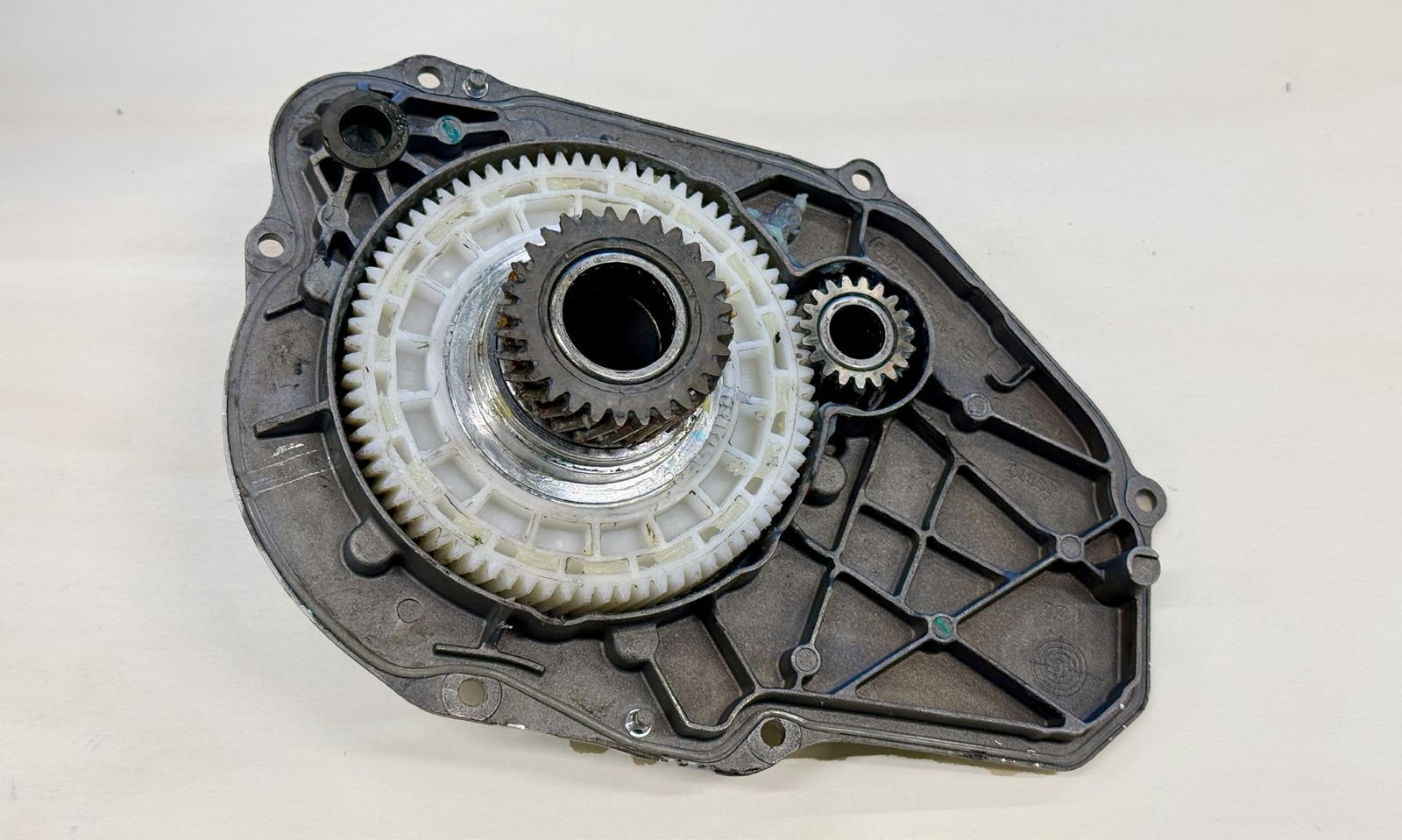
02Together with a fellow student, I took nine mid-drive motors apart and mapped every part and connection. Despite the different brands, they all share the same basic architecture. Combined with interviews, this showed where they fail.
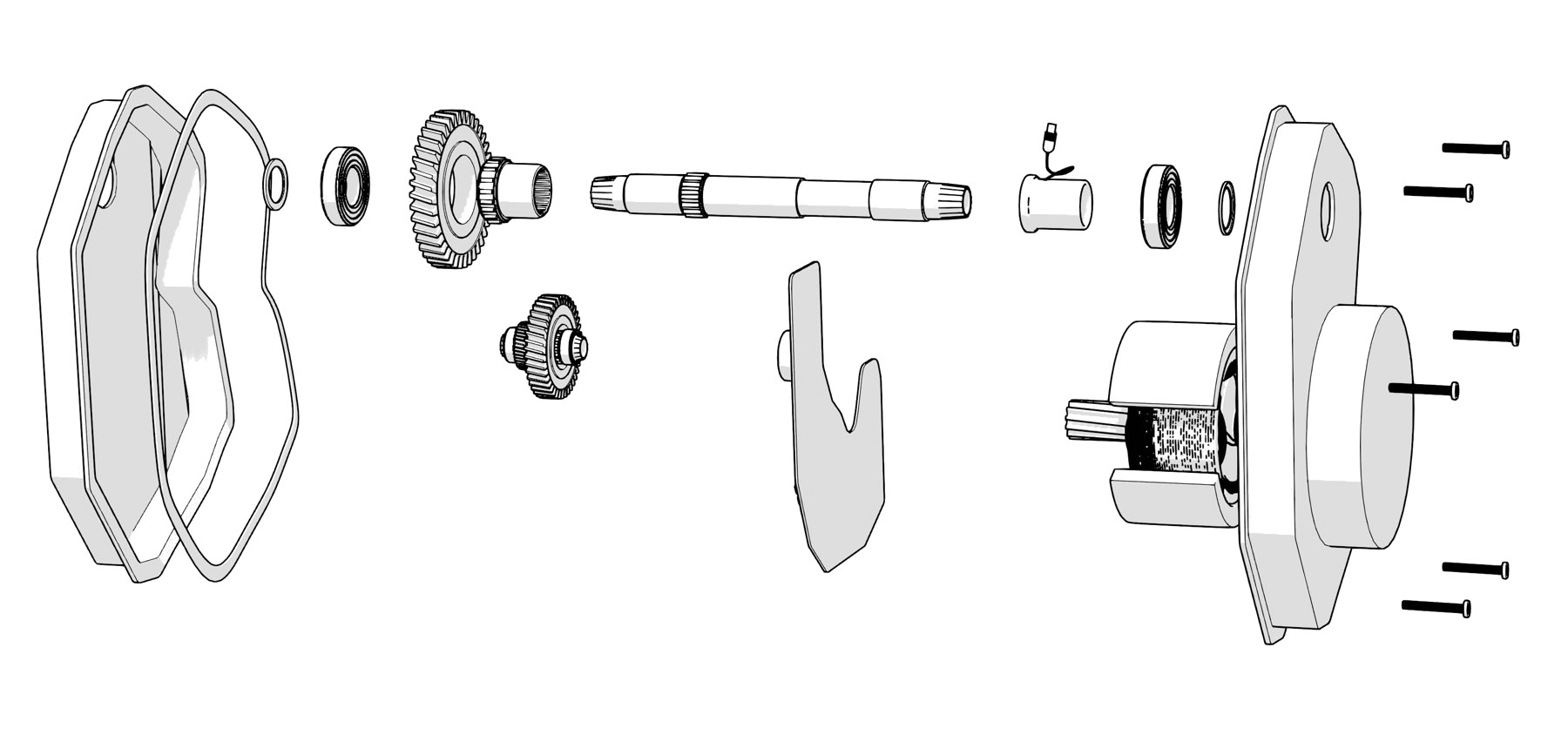
Fig. 2 — Generalised mid-drive motor, derived from the teardowns. Failure shares from interviews with revision experts.
Choosing what to measure
03Experts describe a failing motor in subjective terms: noise, stiffness, play. I listed six signals that could make this measurable and scored each one on four criteria.
Vibration came out on top. It shows wear early, can be measured from outside the housing and covers both bearings and gears. Motor power came close, but depends on access to the manufacturer's software.
| Signal | Detects wear early | Quick during a service | Works without opening | Bearings and gears |
|---|---|---|---|---|
| Play | −− | ++ | + | + |
| Motor power | + | + | + | + |
| Temperature | − | − | + | + |
| Water ingress | ++ | + | −− | − |
| Slipping | −− | −− | − | − |
| Vibration | ++ | + | ++ | ++ |
Fig. 3 — Harris profile of the six candidate signals (thesis table 8.2).
The prototype
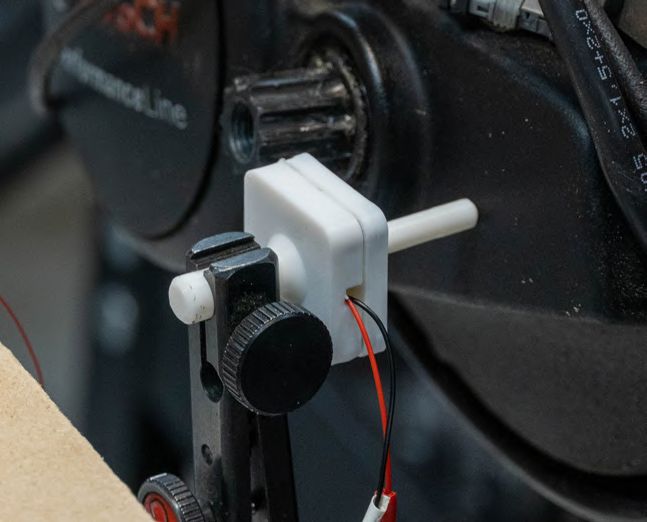
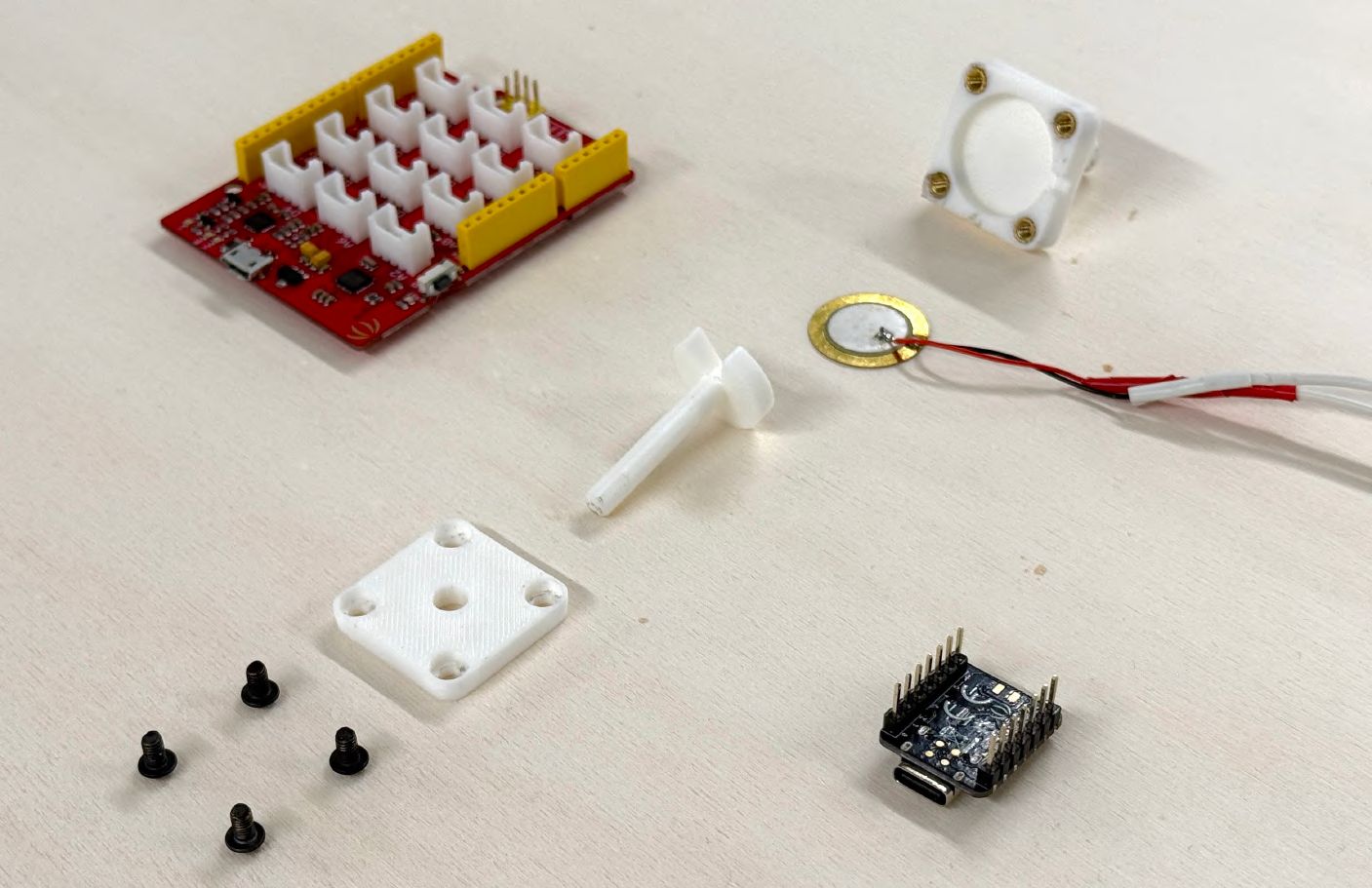
04A piezo sensor is pressed against the motor housing by a 3D-printed 'finger' on a heavy, rigid stand. The motor runs in walk-assist mode, held on by a clamp, so nobody touches the bike.
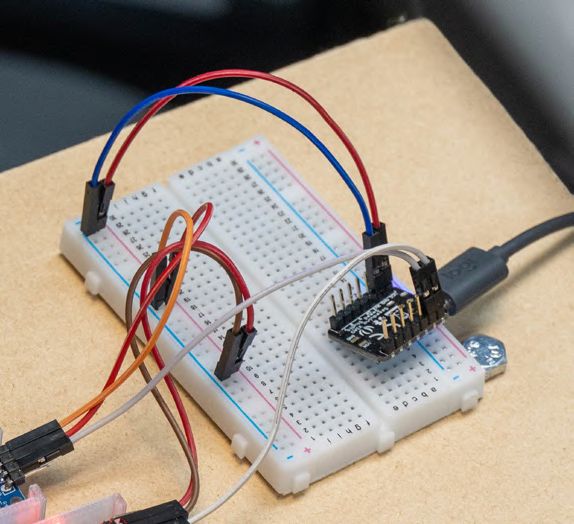
A Seeeduino XIAO samples the signal at ~4000 samples per second for 10 seconds. Scripts on a laptop plot it live, then calculate RMS, an FFT and the energy per frequency band.

Explore the measurements
05I tested two motor models: Bosch motors with known defects swapped in one at a time, and Shimano motors with unknown damage. Pick a motor and compare it with the healthy baseline.
Fig. 4 — RMS and band energy are measured values (thesis table 9.3). The moving signal is a visualisation built from those values, not a raw recording.
What I found
06Broken motors vibrate more
In almost every case the defective motor had a higher RMS. With all bearings damaged, it was nearly four times the healthy level. The damaged Shimano motors also scored above their healthy counterpart, at a much lower level overall. RMS works as a quick first check.
Defects shift the energy
Every damaged Bosch motor moved energy into the 80–160 Hz band, and most defects left a slightly different pattern. That hints at telling defects apart, not just spotting them.
The raw signal matters
The broken gear produced a peak once per crank rotation that RMS and band energy completely missed. A good tool needs to look at the time signal too.
Proof of principle, not a product
Two motor models, two measurements per case. It shows the method works; reliable thresholds per defect need much more data.
The concept
07A wireless sensor on a stand plus software with a database of healthy baselines per motor type. The mechanic measures during a normal service, in an estimated fifteen minutes, and gets advice on what to do next.
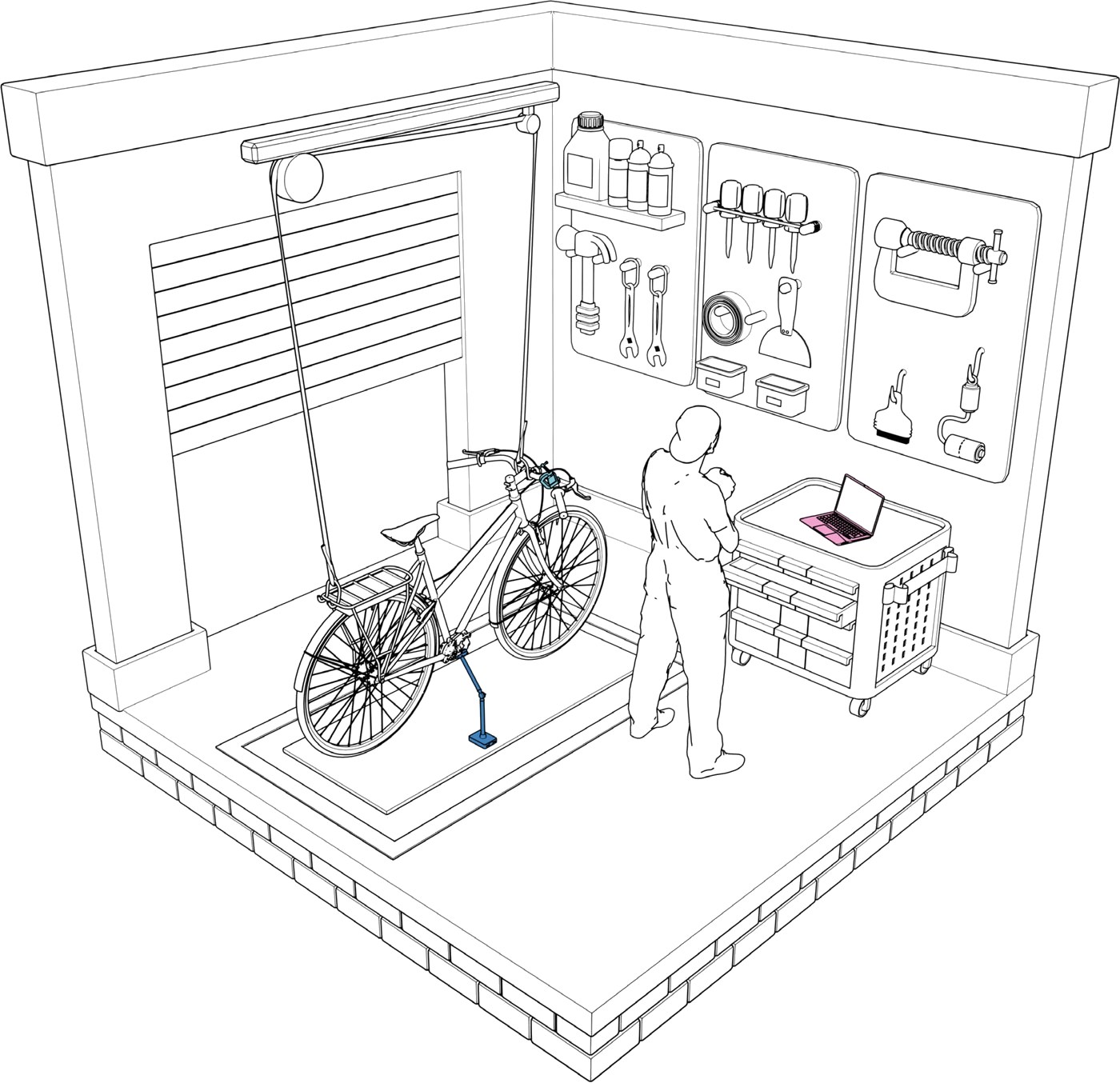
- 01Prepare
Hang the bike, remove chain and covers.
- 02Position
Rest the motor against the sensor finger.
- 03Run
Clamp the walk-assist button.
- 04Measure
Start recording from the laptop.
- 05Decide
Compare with the baseline and get advice.
Feedback and next steps
08I presented the concept to a bike mechanic and a revision expert. Both valued an objective diagnosis that doesn't depend on the manufacturer's software. They were just as clear about what doesn't work yet.
- Feedback
Too slow for a regular service
Removing chain, cranks and covers would take about thirty minutes, not my estimated fifteen. In this form the mechanic would only measure a motor that already sounds wrong, which defeats early detection.
Next stepFewer parts to remove and a shorter measurement, so it fits a standard service.
- Feedback
The clamp is improvised
Holding the walk-assist button down with a clamp risks damaging the display and gives inconsistent runs.
Next stepA test mode in the motor software that runs the motor for a fixed time. That needs the manufacturers on board.
- Feedback
A hanging bike can move
Results have to be comparable between bikes and between workshops.
Next stepA standardised setup that is hard to get wrong.
- Feedback
Build the sensor into the motor
The revision expert's idea: motors that monitor their own condition, which would also show manufacturers how their motors wear in real use.
Next stepThe bigger version of this project. It starts with a much larger set of baseline measurements.
I learned just enough about vibration physics to build a prototype that works. I'm not a vibration specialist, and to take this further I would bring one in. That is the part of design I enjoy most: framing the problem, building enough to test an idea, and knowing when to involve the expert.
The principle isn't specific to bikes. Anything with bearings, gears or motors starts to vibrate differently as it wears: pumps, fans, conveyors, a production line. Industry calls this condition monitoring. My thesis brought it to the bike workshop, with €15 of electronics and a healthy baseline to compare against.